I/ How Distributors Can Evaluate a Coconut Water Manufacturer?
Choosing the right coconut water manufacturer is one of the most important decisions for distributors, importers, and retail buyers. While product taste often attracts initial attention, long-term distribution success depends on much more than flavor.
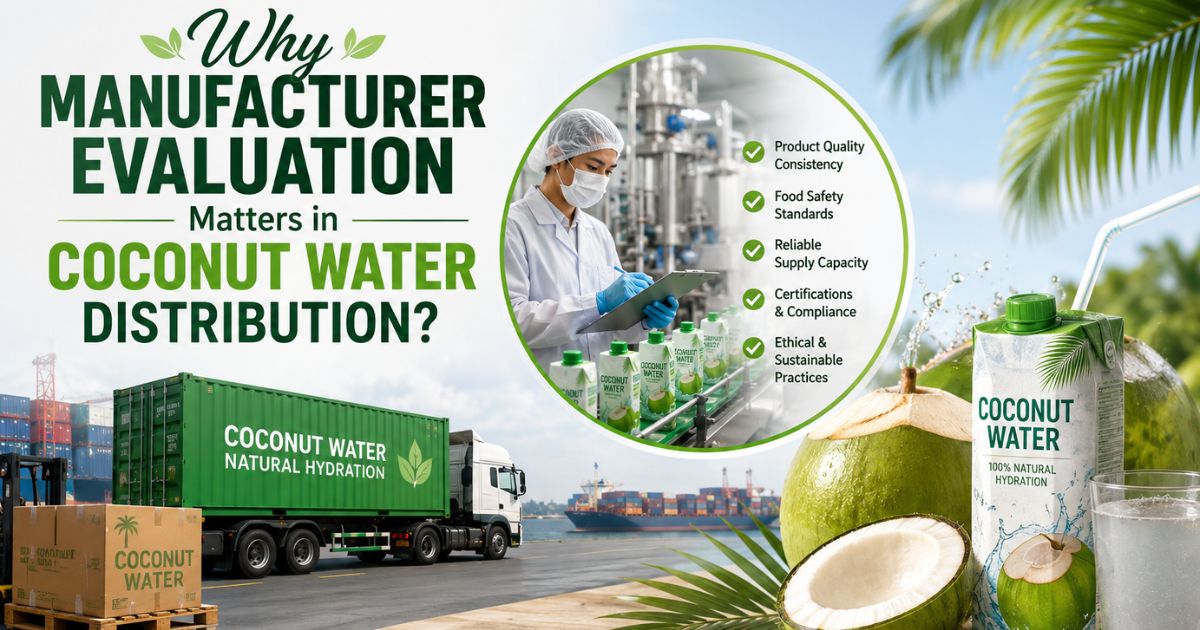
A reliable coconut water supplier should consistently deliver quality products, maintain food safety standards, provide complete export documentation, and support market-specific requirements. Without a structured evaluation process, distributors may face product inconsistencies, shipment delays, compliance issues, and increased business risk.
This guide provides a practical framework to help distributors evaluate a coconut water manufacturer before establishing a sourcing partnership.
III/ Start with Product Quality and Consistency
1/ Ingredient Transparency
The first step is understanding exactly what is inside the product.
Distributors should verify whether the product is:
- - 100% coconut water
- - Coconut water with pulp
- - Organic coconut water
- - Flavored coconut water
- - Coconut water with added sugar or sweeteners
A transparent ingredient declaration allows buyers to assess market suitability and regulatory compliance.
2/ Nutrition Panel Accuracy
Review the nutrition facts carefully.
Key values to examine include:
- - Calories
- Total sugars
- Added sugars
- - Sodium
- - Potassium
- - Serving size
Accurate nutrition labeling is essential for import approval and consumer confidence.
3/ Taste and Batch Consistency
Consistency is critical for repeat purchases.
Request product samples from different production batches whenever possible. This helps determine whether flavor, aroma, color, and overall quality remain stable over time.
IV/ Check Certifications and Food Safety Standards
1/ Core Food Safety Documents
Reliable manufacturers should provide recognized food safety certifications such as:
- - HACCP
- - ISO 22000
- - Quality documentation
These certifications demonstrate established food safety management systems.
2/ Market-Specific Certifications
Depending on the target market, distributors may also require:
- - Halal Certification
- - Organic Certification
- - USDA Organic
- - EU Organic
- Other market-specific approvals
Certification requirements vary by region and retail channel.
3/ Document Validity
Always verify:
- - Certificate owner
- - Scope of certification
- - Expiration date
- - Product coverage
Expired or incomplete certifications can create import complications.
V/ Evaluate Packaging Format and Shelf-Life Fit
1/ Can, Bottle, Carton, or Bulk Format
Packaging format affects:
- - Retail positioning
- - Transportation efficiency
- - Shelf presentation
- - Consumer convenience
Different channels may require different packaging solutions.
3/ Shelf-Life Verification
Ask manufacturers for:
- - Shelf-life reports
- - Storage recommendations
- - Production date coding systems
- - Product specifications
Longer shelf life can improve inventory management and reduce distribution risk.
VI/ Review Export Readiness and Documentation
1/ Required Export Documents
Importers should request documentation such as:
- - Commercial Invoice
- - Packing List
- - Certificate of Analysis (COA)
- - Certificate of Origin
- - Bill of Lading
- - Health Certificate (when required)
Complete documentation helps prevent customs delays.
2/ Labeling Readiness
Check whether the manufacturer can support:
- - Multiple languages
- - Market-specific nutrition panels
- - Barcode requirements
- - Recycling symbols
- - Local compliance statements
Label flexibility is important when entering multiple markets.
3/ Regulatory Flexibility
A strong coconut water exporter should be capable of adapting labels and documentation to different country requirements.
VII/ Assess Production Capacity and Supply Reliability
1/ Monthly Production Capacity
Distributors should request realistic production capacity information for each SKU and packaging format.
Reliable manufacturers provide transparent production data rather than overly optimistic estimates.
2/ Lead Time Management
Evaluate:
- Standard production lead times
- Peak-season performance
- Reorder flexibility
- Shipping schedules
Predictable lead times improve inventory planning.
3/ Raw Material Stability
Ask about:
- -Coconut sourcing regions
- -Seasonal supply variations
- -Contingency plans
- -Supply chain management
Stable raw material sourcing contributes to long-term product consistency.
VIII/ Compare Market Fit by Product Variant
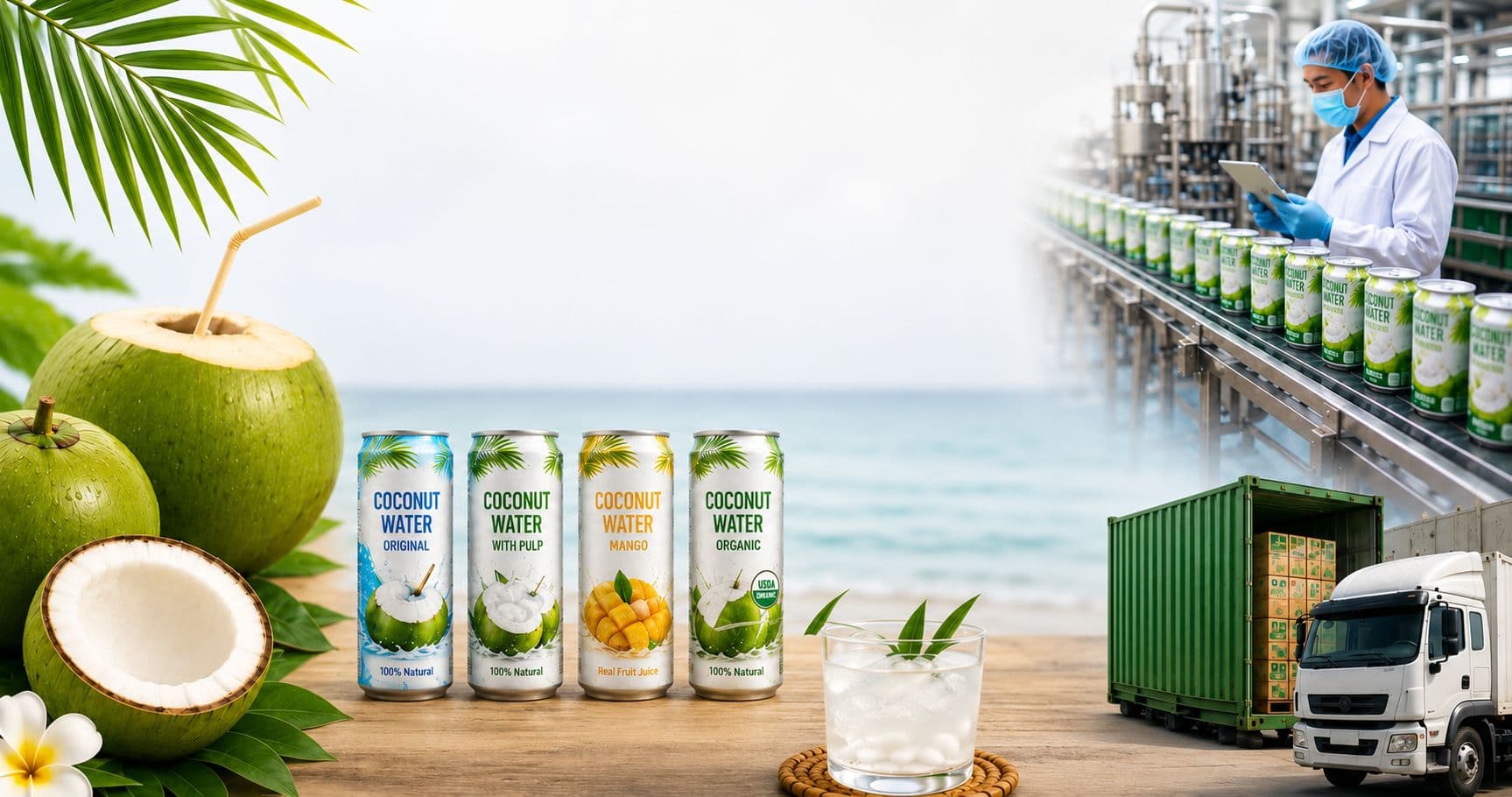
1/ Organic Coconut Water
Suitable for:
- -Organic retailers
- -Premium supermarkets
- -Health-focused consumers
2/ Coconut Water Original
Ideal for:
- -Mainstream beverage channels
- -Everyday hydration categories
- -Broad consumer appeal
3/ Coconut Water with Pulp
Popular in:
- -Asian markets
- -Tropical beverage segments
- -Consumers seeking texture-rich beverages
4/ Mango Coconut Water
Appeals to:
- -Younger consumers
- -Flavor-focused shoppers
- -Convenience retail environments
Selecting the right SKU is often as important as selecting the right manufacturer.
IX/ Conclusion: Choose a Manufacturer That Supports Long-Term Distribution
Evaluating a coconut water manufacturer requires more than comparing product prices. Successful distributors assess product quality, certifications, packaging compatibility, shelf life, export documentation, production capacity, and communication reliability.
By applying a structured evaluation process, buyers can reduce sourcing risks and build long-term partnerships that support sustainable market growth.
Before making a final decision, request product specifications, samples, certification documents, and distribution support materials to ensure the manufacturer aligns with your business objectives.