What Importers and Retailers Need to Know
1/ Impact on Import Planning, Retail Rotation, and Consumer Trust
A shorter remaining shelf life upon arrival can create logistical challenges for distributors and retailers. Buyers should evaluate production schedules, shipping transit times, and inventory turnover before placing orders.
1/ Processing Method and Filling Conditions
Processing technologies help ensure product safety and stability. Proper filling procedures and quality controls contribute to maintaining product integrity throughout distribution.
2/ Packaging Format and Seal Integrity
Packaging plays a critical role in protecting coconut water from contamination and environmental exposure. Properly sealed containers help maintain product quality during storage and transportation.
3/ Temperature, Storage, and Transport Exposure
Exposure to excessive heat, direct sunlight, or unsuitable storage environments may negatively affect product quality. Maintaining recommended storage conditions is essential throughout the supply chain.
4/ Ingredient Formulation and Product Variant
Different product formulations may require different stability considerations. Original coconut water, organic coconut water, coconut water with pulp, and flavored variants may have unique product specifications.
IV/ What Buyers Should Check
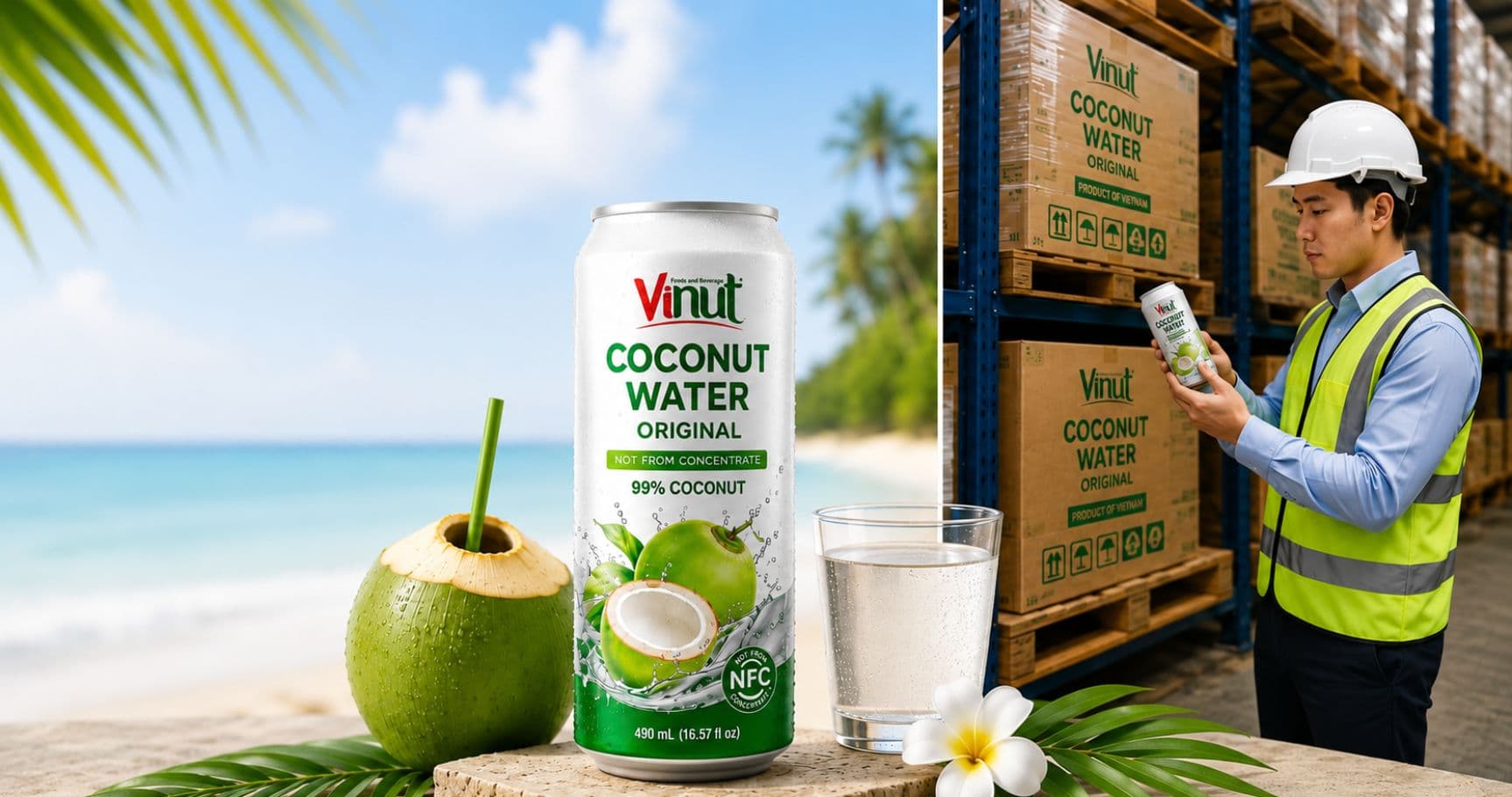
Aluminum cans are widely used for coconut water because they provide strong protection during transportation and storage.
Before purchasing, buyers should review several important factors.
1/ Best-Before Date and Production Date
Always verify the production date and best-before date provided on the packaging or product documentation.
2/ Storage Instructions on the Label
Storage recommendations should be clearly stated and followed throughout the distribution process.
3/ Can Condition, Leakage, and Swelling Risks
Inspect cans for dents, leakage, corrosion, or swelling. Damaged packaging may compromise product safety and quality.
V/ Shelf Life Differences Across Product Types
1/ Organic Coconut Water
Buyers should verify organic certification documents and ensure compliance with relevant organic standards.
2/ Original Coconut Water
As the core SKU in many product portfolios, original coconut water should be evaluated based on verified product specifications and labeling information.
3/ Coconut Water with Pulp
Products containing pulp may require additional attention to stability and settling characteristics. Shake guidance should be clearly communicated to consumers.
4/ Mango Coconut Water
Flavored variants should be reviewed for ingredient consistency, flavor stability, and product documentation.
VI/ Importer Checklist Before Placing an Order
Before sourcing coconut water, importers should verify:
- - Product Data Sheet (PDS)
- - Certificate of Analysis (COA)
- - Best-before date information
- - Batch traceability system
- - Export documentation
- - Packaging specifications
- - Market-specific labeling compliance
- - Storage recommendations
1/ Product Data Sheet and COA
The PDS and COA provide important information regarding product specifications, quality parameters, and compliance requirements.
2/ Batch Traceability and Export Documents
Reliable traceability systems help support quality assurance and regulatory compliance.
3/ Market-Specific Label Compliance
Importers should ensure that labels comply with destination-market regulations before shipment.
1/ 490 mL Aluminum Can Format
The 490 mL aluminum can format is suitable for retail shelves, convenience stores, supermarkets, and export markets.
2/ Product of Vietnam Positioning
VINUT Coconut Water is proudly manufactured in Vietnam and supplied to global markets through established export channels.
3/ Portfolio Flexibility
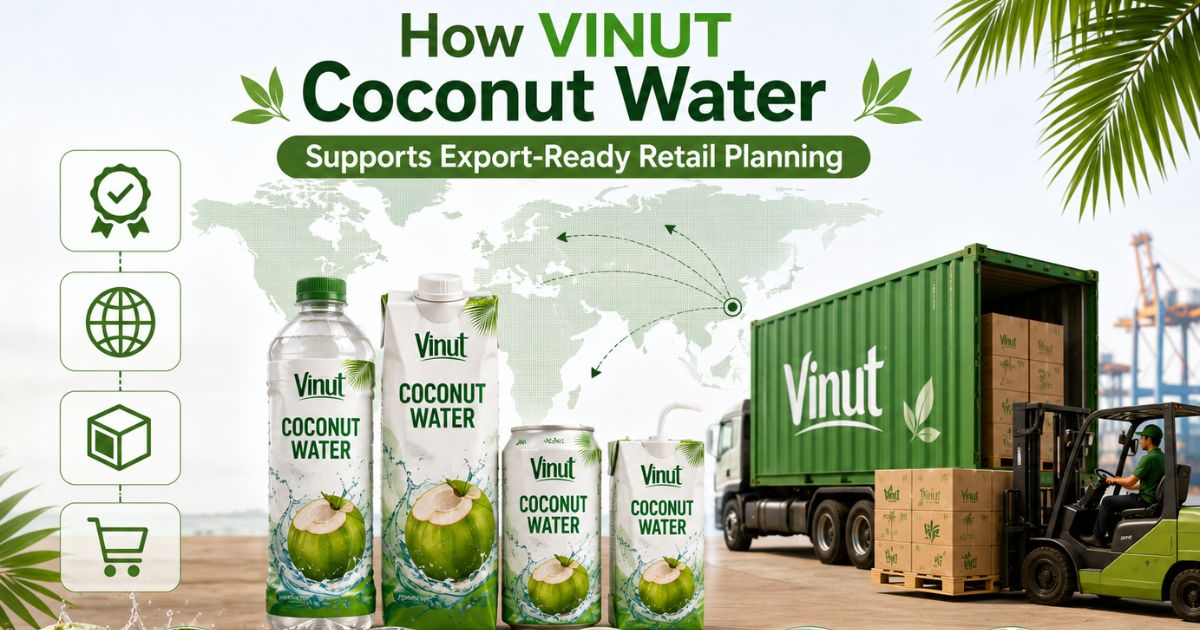
The VINUT Coconut Water Series includes:
- -Coconut Water Original
- -Organic Coconut Water
- -Coconut Water with Pulp
- -Mango Coconut Water
This variety allows distributors and retailers to build a broader coconut water category for different consumer preferences.
VIII/ Final Takeaway for Importers and Retailers
Coconut water shelf life should be viewed as a product-specific specification rather than a generic industry claim. Importers and retailers should evaluate storage requirements, packaging integrity, product documentation, and market compliance before sourcing.
By reviewing Product Data Sheets, COAs, labeling requirements, and storage recommendations, buyers can make more informed purchasing decisions and support successful retail distribution.
For detailed specifications and market requirements, buyers are encouraged to request the latest product documentation before placing an order.