Coconut Water Ingredients: What Should Be on the Label?
Understanding coconut water ingredients is important for consumers, importers, distributors, and retailers. A clear and accurate label helps buyers understand what they are purchasing and allows businesses to verify product suitability before importing or listing a product.
Whether the product is 100% coconut water, contains fruit juice, includes pulp, or uses preservatives, the label should provide transparent information that supports informed purchasing decisions.
I/ Why Ingredient Labels Matter in Coconut Water
Today's consumers pay closer attention to ingredient lists than ever before. Clean-label trends, product transparency, and growing interest in natural beverages have made label information an important part of the purchasing process.
For importers and retailers, ingredient labels also serve as a verification tool when evaluating suppliers and products for different markets.
II/ What Basic Information Should a Coconut Water Label Show?
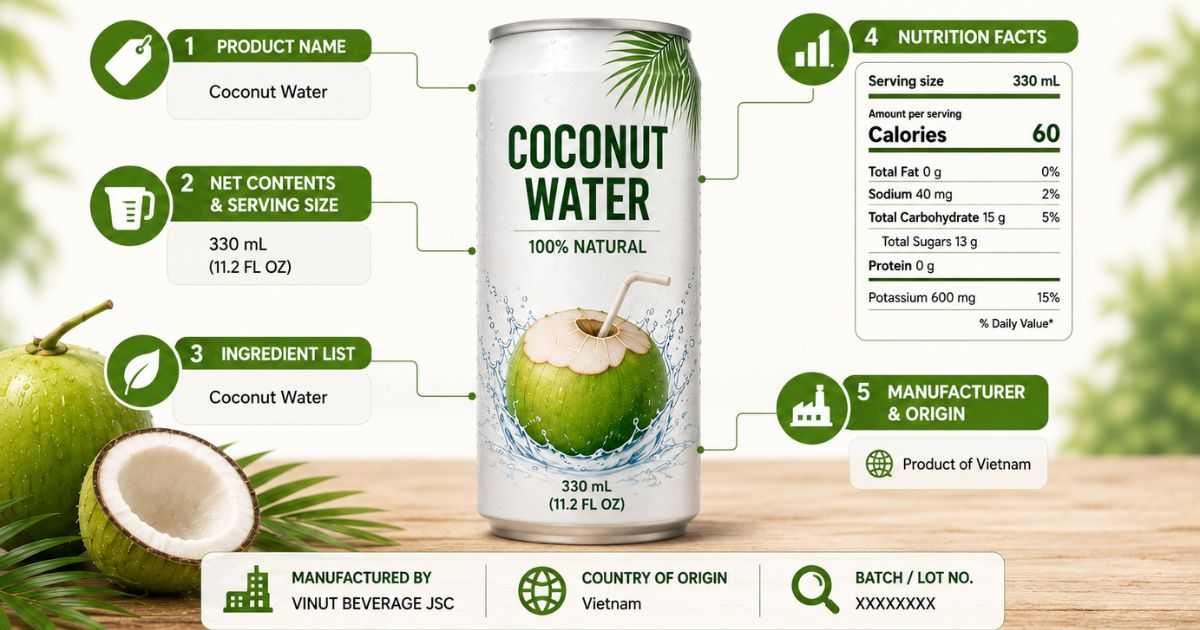
1/ Product Name
The label should clearly identify the product, such as:
- Coconut Water
- Organic Coconut Water
- Coconut Water with Pulp
- Mango Coconut Water
2/ Net Contents and Serving Size
Consumers should easily see the product volume and serving information.
3/ Ingredient List
The ingredient list should display all ingredients used in the product in a clear and transparent manner.
4/ Nutrition Facts
The nutrition panel typically includes:
- -Calories
- -Total sugars
- -Sodium
- -Potassium
- -Serving size
5/ Manufacturer and Origin
A complete label should provide manufacturer or distributor information, country of origin, and batch traceability details.
III/ How to Read the Ingredient List on Coconut Water
1/ Coconut Water as the Main Ingredient
For most coconut water products, coconut water should be the primary ingredient.
2/ Added Sugar
Some products may contain added sugar to adjust sweetness. Buyers should review ingredient statements and nutrition facts together.
3/ Fruit Juice Blends
Flavored varieties may include fruit juices such as mango juice to create unique taste profiles.
4/ Coconut Pulp
Certain products contain coconut pulp, offering additional texture and a different drinking experience.
5/ Preservatives and Sulfites
Some formulations may use preservatives such as sodium metabisulfite. If present, these should be clearly declared on the label.
IV/ Examples of Coconut Water Ingredients
- Organic Coconut Water
Ingredients:
100% Organic Coconut Water- Coconut Water Original
Ingredients:
Coconut Water, Less Than 1% Sugar- Coconut Water with Pulp
Ingredients:
Coconut Water, Coconut Pulp, Sugar, Sodium Metabisulfite
- Coconut Water with Mango
Ingredients:
Coconut Water, Mango Juice
V/ Marketing Claims Buyers Should Verify
Before purchasing or importing coconut water, buyers should verify label claims such as:
1/ 100% Juice
Indicates the product is made entirely from juice ingredients without dilution.
2/ Not From Concentrate
Refers to products produced without using concentrated juice.
3/ 99% Coconut
Indicates coconut water is the primary component of the formulation.
4/ USDA Organic
Should be supported by valid organic certification documentation.
5/ Hydrate Naturally
This claim should be viewed as a product positioning statement rather than a medical claim.
VI/ Buyer Checklist Before Importing Coconut Water
Before listing or importing coconut water products, buyers should verify:
- -Ingredient consistency
- -Nutrition panel format
- -Allergen or sensitivity declarations
- -Language requirements
- -Country-specific labeling needs
- -Supporting certification documents
A thorough review helps reduce compliance and sourcing risks.
VII/ Conclusion
A well-designed coconut water label provides more than product information—it builds trust. By reviewing ingredient lists, nutrition facts, origin details, certifications, and product claims, consumers and buyers can make informed decisions.
For importers and distributors, ingredient transparency is an important indicator of product quality, supplier reliability, and market readiness.