? Quick Answer
No-preservative RTD tea is a packaged tea beverage made without added preservatives while maintaining safety and shelf stability through controlled formulation, processing technology, packaging integrity, and quality testing.
II/ Why Consumers Are Paying More Attention to Preservatives
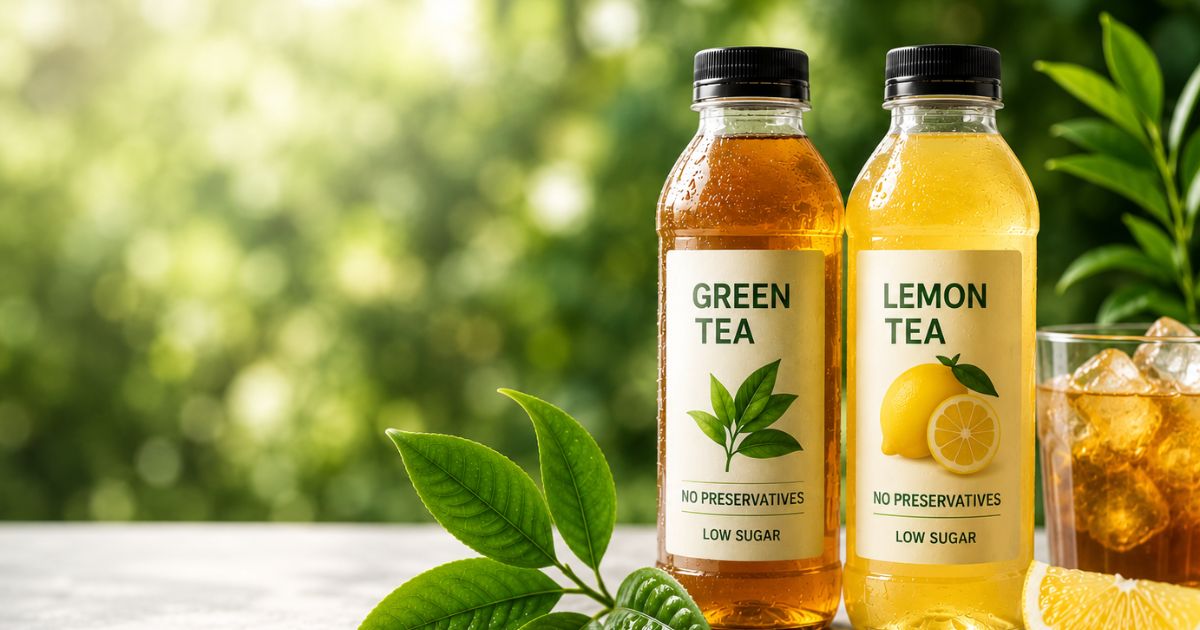
Interest in ingredient transparency has increased across beverage categories.
Many consumers now prefer:
- Shorter ingredient lists
- Familiar ingredients
- Reduced sugar products
- Convenient beverage formats
- Products perceived as simpler
This shift is often associated with the broader clean label movement.
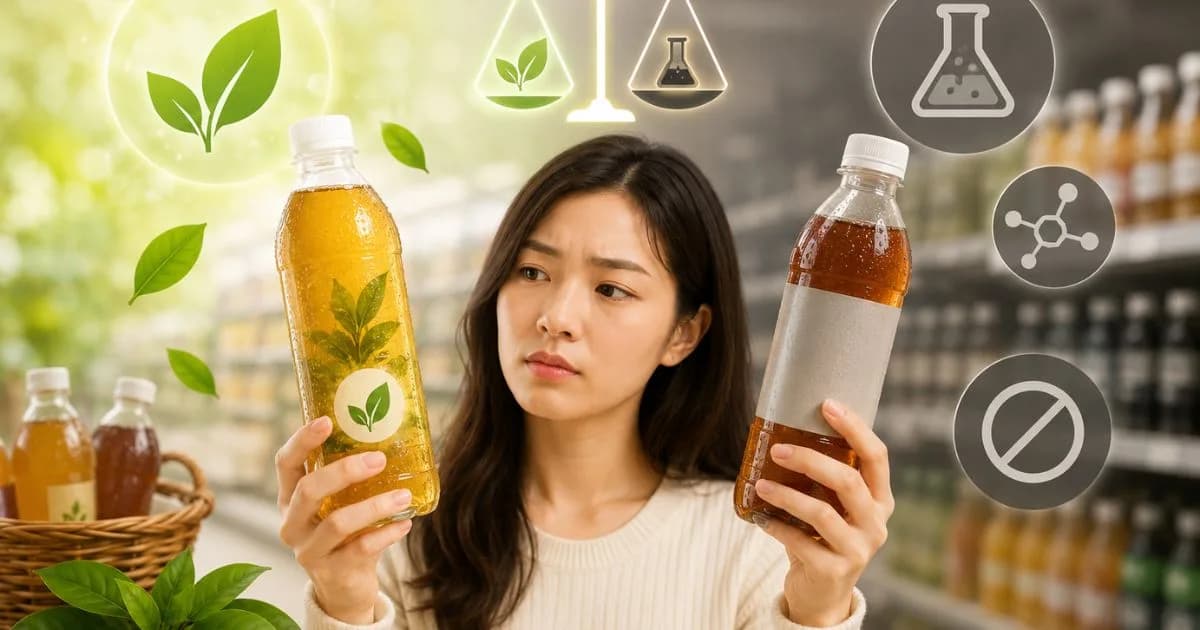
However, it is important to understand that approved food preservatives are regulated and used to maintain food quality and safety. Choosing products without preservatives should not automatically imply that preserved products are unsafe.
Consumer preference today is increasingly influenced by:
- Label readability
- Taste expectations
- Convenience
- Lifestyle choices
- Perception of freshness
III/Market Demand: Why No-Preservative RTD Tea Matters
The growth of no-preservative RTD tea reflects larger beverage market changes.
Several factors contribute to demand:
1. Convenience
Consumers want beverages that require no preparation.
2. Clean Label Interest
Shoppers increasingly compare ingredient lists before purchasing.
3. Health-Conscious Purchasing
Many buyers look for lower sugar and lighter beverage alternatives.
4. Flavor Innovation
Tea combined with fruit flavors, botanical ingredients, and functional positioning continues to expand.
Retailers and distributors often monitor these trends because product differentiation becomes increasingly important in competitive beverage categories.
IV/ How RTD Tea Can Stay Shelf-Stable Without Added Preservatives
One of the most common questions is:
How can tea remain safe if preservatives are not added?
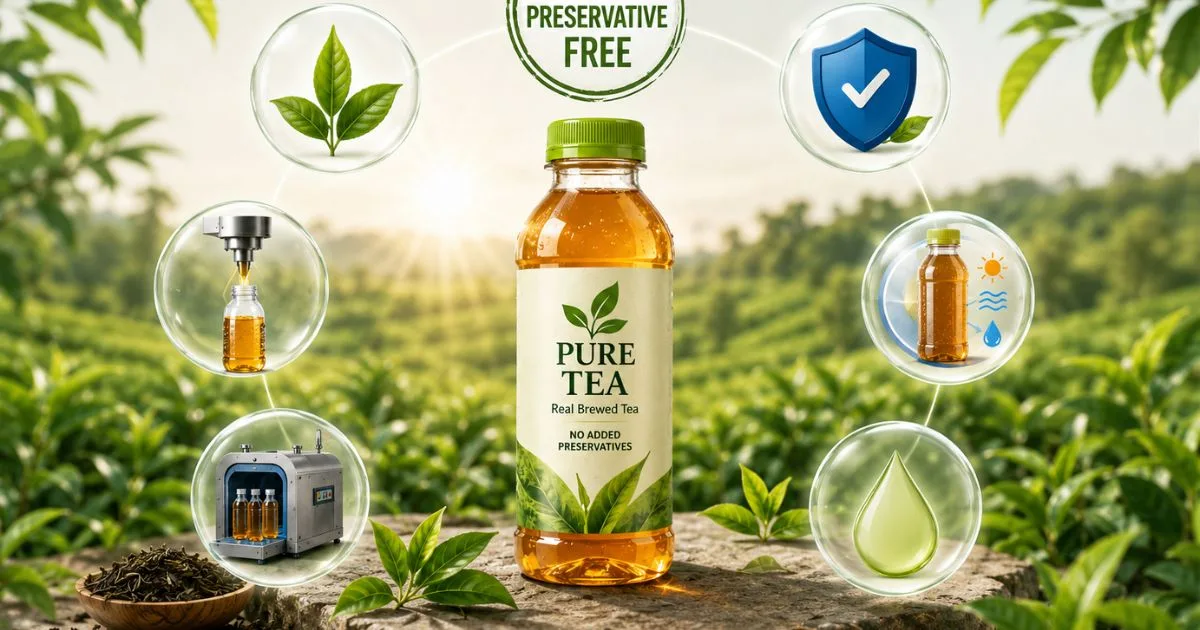
The answer lies in formulation and manufacturing control.
Step 1: Formulation Design
Developers adjust:
- Tea concentration
- Acidity
- Sweetness level
- Ingredient interactions
Step 2: Processing
Heat treatment reduces microorganisms.
Common approaches:
- Hot-fill technology
- Pasteurization
- Aseptic processing
Step 3: Packaging
Containers must maintain product integrity.
Typical formats:
- Aluminum cans
- PET bottles
- Aseptic cartons
Step 4: Stability Testing
Products undergo:
- Shelf-life studies
- Microbial testing
- Sensory evaluation
- Packaging validation
Simplified Flow
Formulation → Processing → Filling → Packaging → Stability Testing → Market Release
No-preservative products still require strict food safety systems.
V/ Formulation Factors Buyers Should Understand
1. Tea Base Selection
Different tea bases create different flavor profiles:
- Green tea
- Black tea
- Herbal tea
- Fruit-infused tea
2. Sweetness Strategy
Common approaches:
- Standard sugar
- Reduced sugar
- Zero sugar
- Natural sweeteners
3. Acidity Control
Acidity supports:
- Flavor balance
- Product stability
4. Natural Flavor Systems
Fruit extracts and natural flavors may support familiar taste expectations.
5. Functional Positioning
Some products communicate antioxidant content or nutritional value, but such claims should be supported by analytical data.
VI/ Retail and Distribution Considerations
Different channels prioritize different product features.
1. Supermarkets
Focus on category differentiation and shelf visibility.
2. Convenience Stores
Prioritize portability and quick consumption.
3. Food Service (HoReCa)
Often values serving flexibility and beverage pairing.
4. E-commerce
Supports discovery through search behavior and product filtering.
VIII/ Conclusion
The rise of no-preservative RTD tea reflects changing consumer expectations around transparency, convenience, and ingredient simplicity. But the absence of preservatives alone does not determine product quality.
Shelf-stable tea without added preservatives depends on controlled formulation, safe processing, packaging performance, and verified shelf-life data.
For consumers and buyers alike, understanding how these systems work provides a more informed way to evaluate beverage choices.