
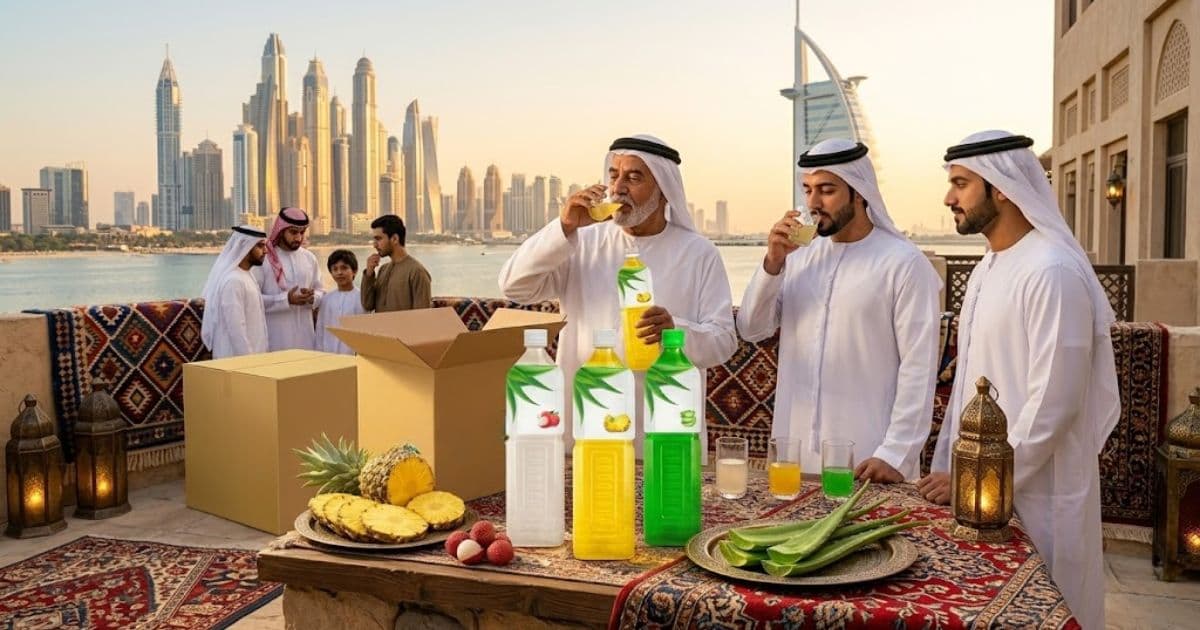
Not every beverage portfolio that looks attractive on paper can succeed in the Middle East. Buyers across GCC markets evaluate more than just product variety—they assess whether a range fits retail channels, consumer expectations, logistics realities, and long-term profitability.
This guide explains how importers, distributors, and retail buyers determine whether a beverage range is truly distribution-ready.
I/ Why Range Suitability Matters More Than Product Variety Alone
1.A wider range is not always a stronger range
In the Middle East beverage market, more SKUs do not necessarily mean better performance. Buyers prefer curated portfolios that present a clear structure rather than an overwhelming list of products.
2. Range suitability affects sell-through, listing decisions, and replenishment confidence
Distributors evaluate how well products move off shelves. A focused range improves turnover rates, supports repeat orders, and builds confidence in long-term partnerships.
II/ The First Filter: Channel Fit Across the Middle East
1. Supermarkets and hypermarkets
These channels prioritize recognizable packaging, strong branding, and scalable SKUs that can perform consistently across multiple locations.
2. Convenience and forecourt retail
Single-serve formats and ready-to-drink beverages dominate here, focusing on portability and immediate refreshment.
3. HoReCa and hospitality channels
Hotels, restaurants, and cafés require premium positioning, versatile formats, and flavors that integrate easily into menus.
4. Wholesale and traditional trade
Affordability, efficient carton sizes, and ease of distribution are critical for success in this channel.
III/ Packaging Formats Buyers Commonly Expect
1.Single-serve formats for convenience and impulse consumption
Portable packaging such as cans and small PET bottles supports on-the-go consumption.
2. Family and multi-serve formats for household consumption
Larger packaging formats are suitable for home use, especially in family-oriented markets.
3. Packaging type decisions
Each format—cans, PET bottles, glass, or cartons—serves different needs depending on channel and positioning.
4. Packaging must support both shelf appeal and logistics efficiency
Packaging should not only attract consumers but also optimize storage, transportation, and retail display.
III/ Flavor Strategy for the Middle East Market
1. Familiarity still matters
Consumers often prefer recognizable and approachable flavors over experimental ones.
2. Tropical appeal can work well when translated clearly
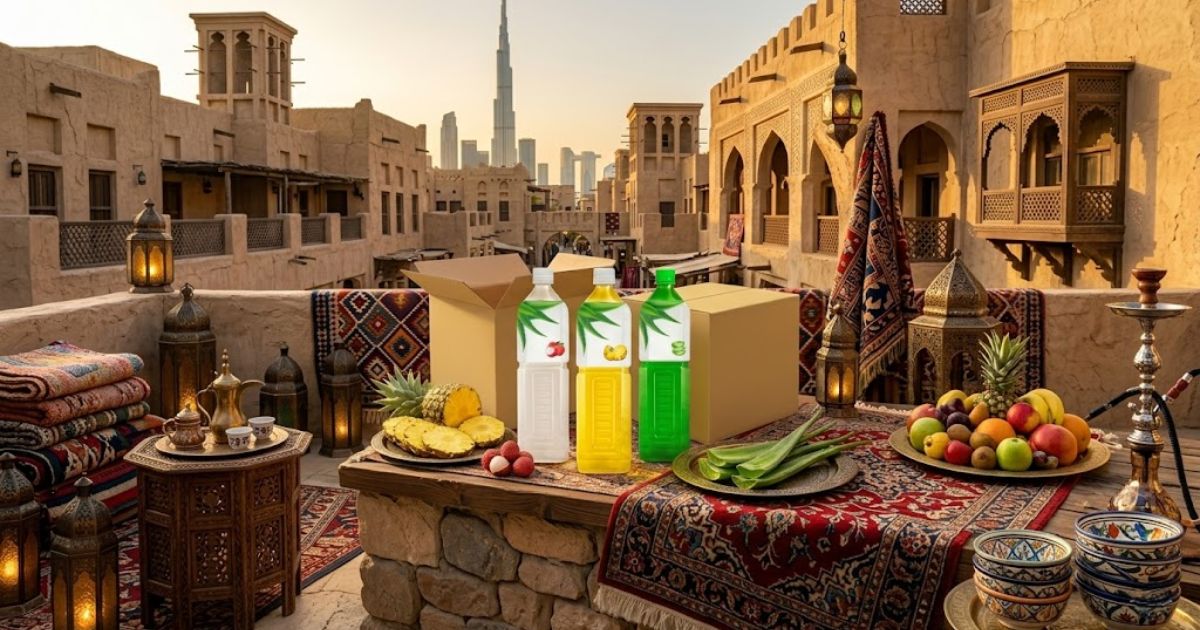
Flavors like mango, lychee, guava, coconut, and pineapple perform well when positioned clearly and consistently.
3. A balanced range should include both core sellers and selective differentiation
A strong portfolio combines high-volume SKUs with a few unique options to stand out.
IV/ Shelf Life, Climate, and Distribution Practicality
1.Shelf-stable logic is especially important
Due to high temperatures and long supply chains, shelf-stable beverages are preferred for import markets.
2. Products must handle long logistics chains
From shipping to warehousing and retail display, products must maintain quality throughout the journey.
3. Clarity on storage and handling supports buyer confidence
Clear instructions on storage conditions help distributors manage products effectively.
V/ Certifications and Market Readiness Signals
1.Certifications are part of commercial trust
Certifications signal compliance and build confidence among buyers and distributors.
2. Labeling and documentation readiness matter alongside product quality
Accurate labeling and complete export documentation are essential for smooth market entry.
3. Middle East buyers often look for operational reliability as much as category fit
Consistency in supply and execution is a key factor in long-term partnerships.
VI/ How Buyers Can Evaluate a Beverage Range More Efficiently
1.Review the range by channel
Assess whether products match specific distribution channels.
2. Review the range by packaging and price ladder
Ensure pricing and formats are commercially balanced.
3. Review the range by core sellers versus exploratory SKUs
Differentiate between high-volume products and niche innovations.
4. Ask whether the supplier can support long-term expansion
Evaluate the supplier’s reliability and growth capability.
VII/ Conclusion
A beverage range becomes suitable for Middle East distribution when it combines channel fit, relevant packaging, clear flavor strategy, shelf stability, and strong operational readiness. A well-structured assortment supports distributor growth and ensures long-term success in a competitive market.
VIII/ FAQ (Featured Snippet Ready)
1. What beverage categories are most suitable for distribution in the Middle East?
Tropical juices, coconut beverages, aloe vera drinks, and refreshment drinks are highly suitable due to their relevance to climate and consumer preferences.
2. Do Middle East buyers prefer single-serve or family-size beverage formats?
Both formats are important—single-serve for convenience channels and multi-serve for household consumption.
3. How important is shelf life for imported beverages in GCC markets?
Shelf life is critical due to long logistics chains and high temperatures.
4. What certifications help beverage brands enter Middle East markets?
Food safety certifications, Halal certification, and proper export documentation are essential.
5. How many SKUs should a distributor evaluate in a new beverage range?
A focused range of well-structured SKUs is preferred over a large, unfocused assortment.