II/ 100% Juice vs 100% Coconut Water
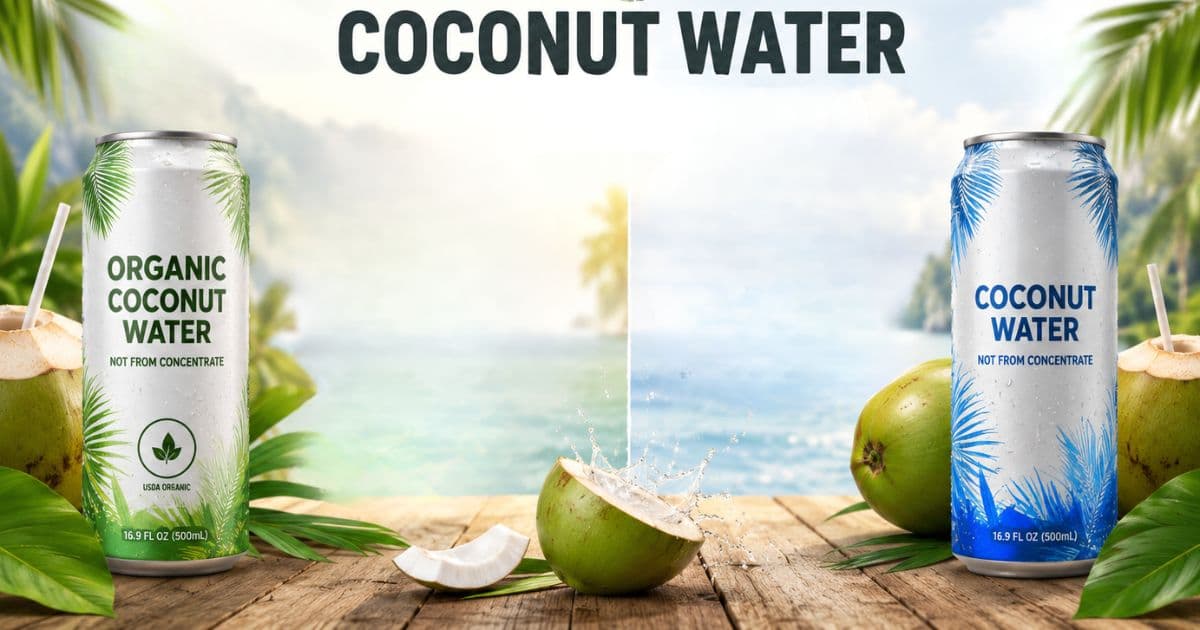
One common misunderstanding is assuming that 100% juice always means 100% coconut water. In reality, these claims are different.
A beverage can carry a 100% juice claim while still blending coconut water with another fruit juice, such as mango juice or pineapple juice.
| Claim | Meaning | What Buyers Should Check |
|---|---|---|
| 100% juice | Made from juice ingredients | Ingredient list |
| 100% coconut water | Contains only coconut water | No additional juice ingredients |
| Juice blend | Combination of coconut water and fruit juice | Flavor composition |
III/ 100% Juice vs 99% Coconut: Why the Difference Matters
Some coconut water products display claims such as “99% coconut” instead of “100% juice.” This usually indicates that the product contains mostly coconut ingredients along with a small amount of other ingredients for flavor balance or formulation stability.
This difference does not necessarily make one product better than another. Instead, it reflects a different product formulation and labeling structure.
V/ How to Read a Coconut Water Label
Understanding coconut water labels helps buyers avoid confusion and improve claim accuracy.
Here are the main elements to review:
1.Front-of-Pack Claims
Look for claims such as:
- 100% juice
- 100% coconut water
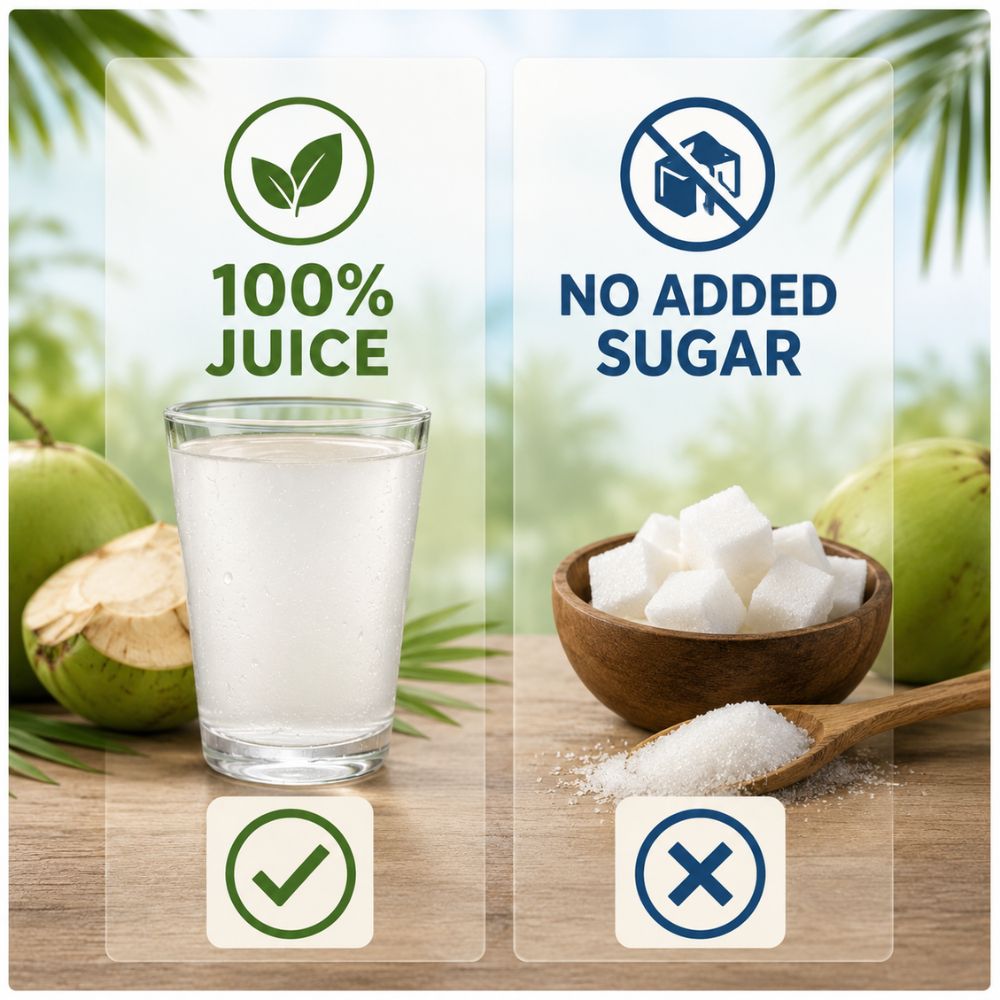
- No added sugar
- Organic
- Not from concentrate
These claims provide quick product positioning but should always be verified through the full label.
2. Ingredient List
The ingredient list is the most reliable source for understanding the actual product composition.
Check whether the beverage contains:
- Only coconut water
- Coconut water plus fruit juice
- Added sugar
- Flavorings or preservatives
3. Nutrition Facts
Review:
- Added sugar
- Total sugar
- Serving size
- Calories
This section helps buyers compare products across different SKUs.
4. Certifications
For export and retail distribution, certifications may include:
- USDA Organic
- HACCP
- ISO
- Halal
- Kosher
Buyers should confirm that certification scope matches the exact SKU being promoted.
VI/ Why 100% Juice Matters for Consumers
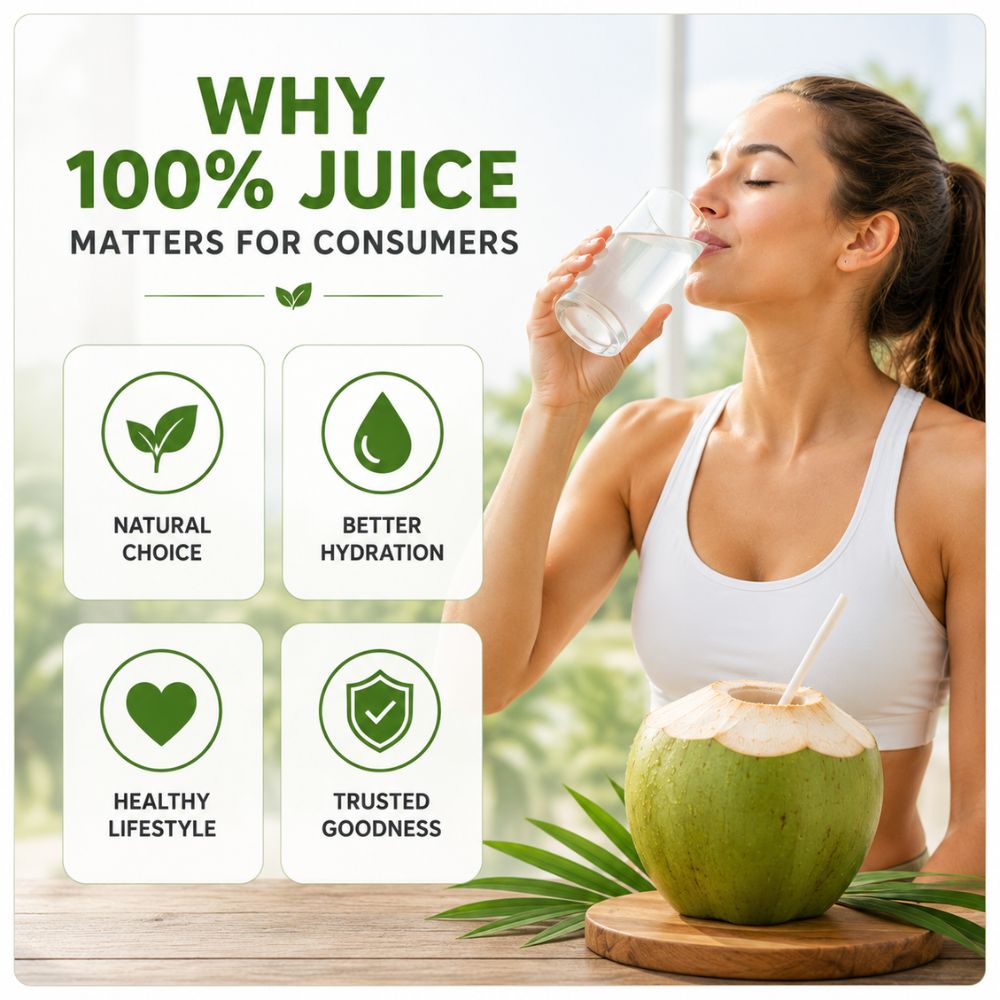
Consumers increasingly look for beverages with:
- Clear ingredient labels
- Natural positioning
- Tropical flavors
- Simple product formulations
The 100% juice claim can help communicate transparency and product simplicity when used accurately.
For everyday beverage occasions, coconut water products are often associated with:
- Refreshment
- Tropical taste
- Convenient hydration
- Better understanding of ingredients
However, brands should avoid making medical or therapeutic claims unless specifically approved by local regulations.
VII/ Why 100% Juice Matters for Buyers
For distributors, importers, and retailers, the 100% juice claim can influence:
- Shelf communication
- Product positioning
- Consumer trust
- E-commerce listing performance
- Export compliance
However, claim accuracy is critical.
Before using claims in catalogs, online listings, packaging, or retail marketing, buyers should verify:
- Ingredient composition
- Added sugar status
- Certification validity
- Destination-market regulations
- Label artwork consistency
Different countries may apply different rules to juice claims, organic claims, and labeling standards.