
III/ Main Electrolytes Found in Coconut Water
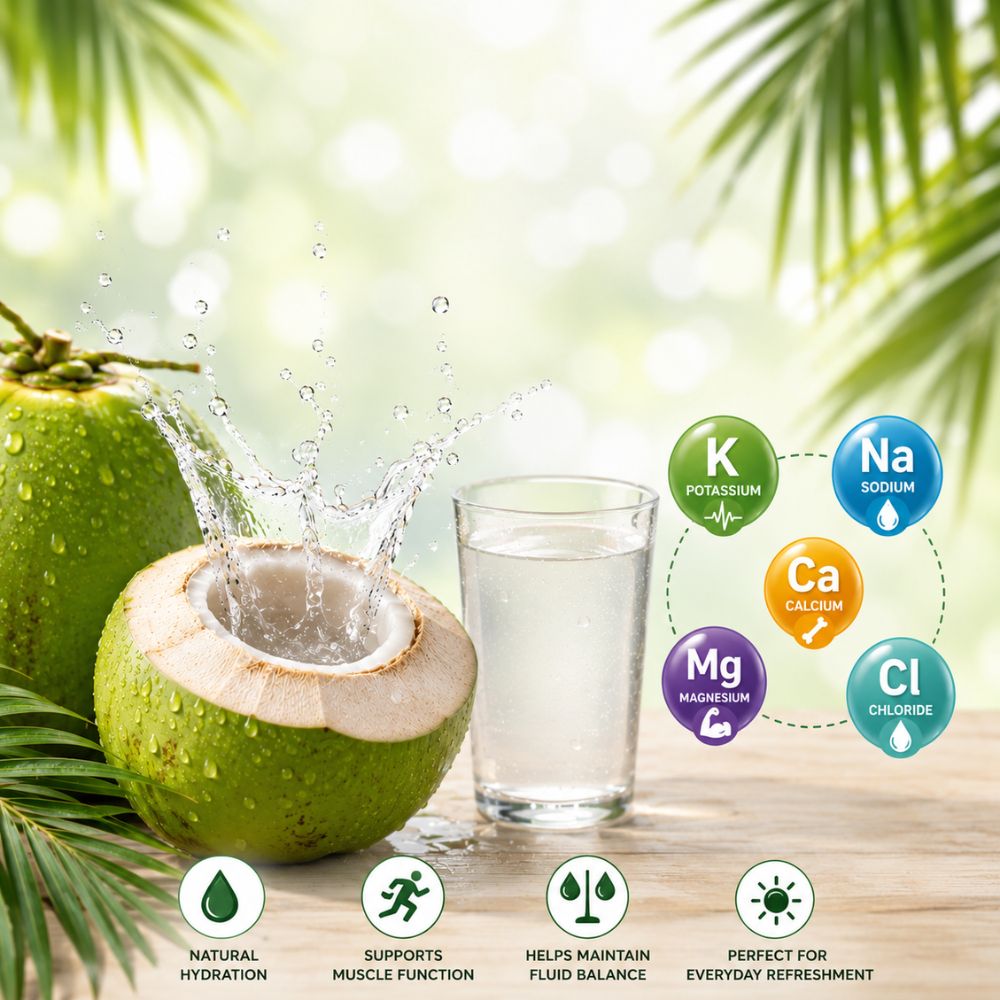
1.Potassium
Potassium is the key electrolyte commonly associated with coconut water. It plays a role in fluid balance and muscle function.
Many consumers choose coconut water because it is naturally rich in potassium compared with traditional soft drinks.
2. Sodium
Coconut water also contains sodium, although usually in lower amounts than many sports drinks.
This makes coconut water suitable for everyday hydration and light activity, while people involved in long endurance exercise or heavy sweating may require additional sodium replacement.
3. Calcium, Magnesium, and Chloride
Depending on the product, coconut water may also contain smaller amounts of:
- Calcium
- Magnesium
- Chloride
These minerals contribute to the overall electrolyte profile of coconut water products.
V/ When Coconut Water May Not Be Enough
Although coconut water contains electrolytes, it may not be suitable for every hydration situation.
For example:
- Long endurance exercise may require higher sodium replacement
- Heavy sweating can increase electrolyte loss
- Illness-related dehydration should follow medical guidance
- Individuals managing potassium intake should consult healthcare professionals
Coconut water should not be presented as a replacement for oral rehydration solutions or medical hydration products.
VI/ Conclusion
- Coconut water naturally contains electrolytes, especially potassium, along with smaller amounts of sodium and other minerals. It can support everyday hydration, warm-weather refreshment, and light physical activity.
- While coconut water may not replace specialized sports drinks for intense exercise or heavy sweating, it remains a popular natural hydration beverage for many consumers worldwide.
- - Explore VINUT Coconut Water products to discover a refreshing coconut water option that fits your hydration preferences.
VII/ FAQ
1.Does coconut water have electrolytes?
Yes. Coconut water naturally contains electrolytes including potassium, sodium, calcium, magnesium, and chloride.
2. What electrolytes are in coconut water?
The main electrolytes in coconut water are potassium and sodium, along with smaller amounts of calcium, magnesium, and chloride.
3. Is coconut water high in potassium?
Coconut water is commonly known for its potassium content compared with many soft drinks and flavored beverages.
4. Is coconut water an electrolyte drink?
Coconut water can be considered a natural electrolyte beverage because it naturally contains minerals that support hydration.
5. Can coconut water help after a workout?
- Coconut water may support hydration after light or moderate exercise. Intense exercise may require additional sodium replacement.